

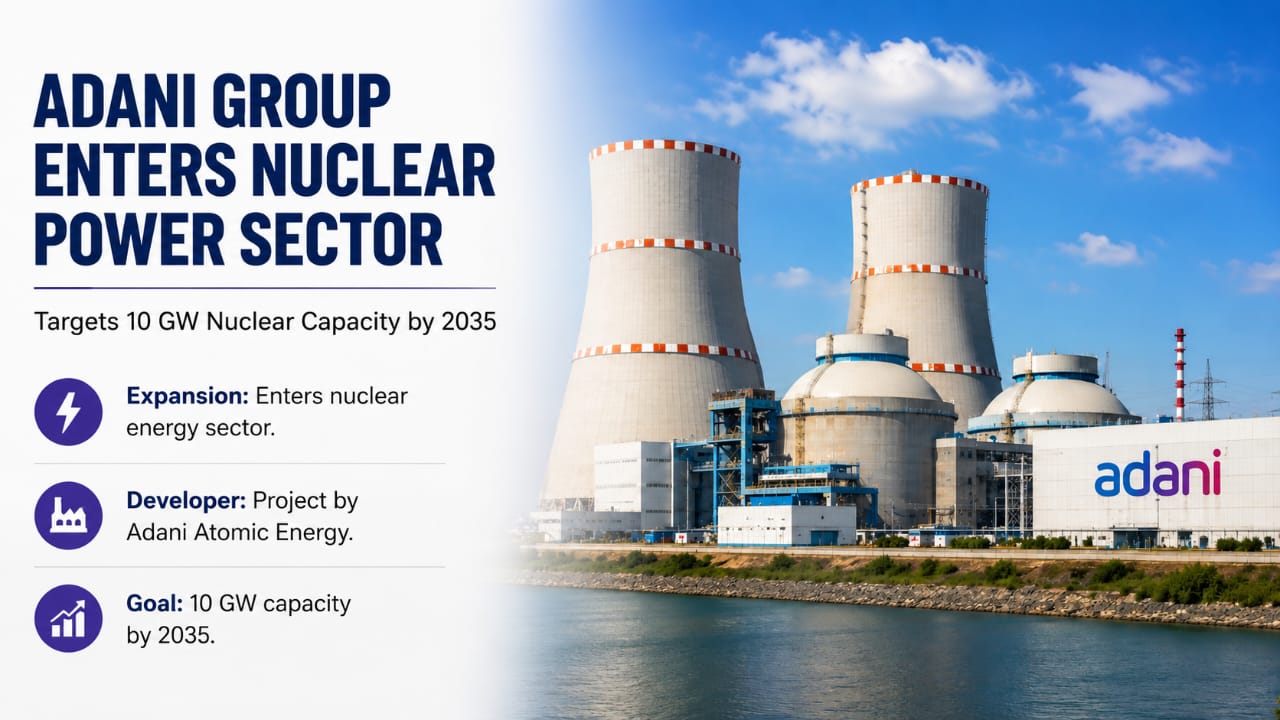
Adani Group Enters Nuclear Power Sector Targets 10 GW Nuclear Capacity By 2035
The Adani Group has announced its entry into India's nuclear power sector with an ambitious target of developing 10 gigawatts (GW) of nuclear power capacity by 2035. The announcement was made by Chairman Gautam Adani during the group's Annual General Meeting (AGM), marking a significant expansion of the conglomerate's integrated energy portfolio. The initiative will be led through its newly established Adani Atomic Energy venture.
The company said the move is aimed at supporting India's growing demand for clean, reliable, round-the-clock electricity. Unlike solar and wind power, nuclear energy provides uninterrupted baseload power, making it a key component of India's long-term energy transition. Adani has also confirmed that land has already been identified for the proposed nuclear projects, although the locations have not yet been disclosed.
The announcement comes as India is opening its nuclear energy sector to greater private participation to accelerate capacity expansion. The Government has set a national target of increasing nuclear power generation from around 8 GW today to 100 GW by 2047, creating opportunities for private companies to invest in the sector alongside state-owned enterprises.
If the 10 GW target is achieved, the Adani Group is expected to become one of India's largest private nuclear power developers. The nuclear initiative complements the group's broader investments in thermal power, renewable energy, electricity transmission, natural gas infrastructure, and large-scale data centres, strengthening its position as a diversified energy and infrastructure company.
The proposed investment reflects Adani Group's long-term strategy to support India's energy security while reducing dependence on fossil fuels. By adding nuclear power to its existing portfolio, the conglomerate aims to contribute to the country's low-carbon energy goals, improve grid reliability, and play a significant role in meeting India's rapidly rising electricity demand over the next decade.